Ear Cropping for Dogs: What It Is, Why It’s Done, and What Jacksonville Pet Owners Should Know
Ear cropping is one of the most frequently discussed—and often misunderstood—procedures in veterinary medicine. For dog owners researching the topic, questions often revolve around safety, ethics, medical necessity, and long-term outcomes. At Normandy Boulevard Animal Hospital, our goal is to provide clear, evidence-based information so pet owners can make informed decisions that align with their dog’s health and well-being.
This article expands on the most common questions we hear from pet owners in Jacksonville, including what ear cropping is, why it’s performed, how the procedure works, and what responsible post-operative care looks like. It also supports the information provided on our Ear Cropping in Jacksonville service page and reflects our hospital’s commitment to ethical veterinary standards and client education.
Understanding Ear Cropping in Dogs
Ear cropping is a surgical procedure in which a portion of a dog’s external ear (pinna) is removed and reshaped. The remaining ear is then positioned to stand upright during the healing process. The procedure is performed under general anesthesia and requires careful surgical technique as well as diligent aftercare.
Historically, ear cropping dates back hundreds of years and was originally performed on working dogs to reduce the risk of ear injuries, infections, or tearing during hunting, guarding, or herding activities. Over time, however, its purpose has shifted.
Today, ear cropping is most commonly associated with specific breed standards, particularly for breeds such as:
- Doberman Pinschers
- Boxers
- Great Danes
- Cane Corsos
- Miniature Pinschers
For many owners, the decision to crop ears is primarily aesthetic, influenced by tradition, breed presentation, or personal preference.
Why Is Ear Cropping Done?
Aesthetic and Breed Standards
The most common reason ear cropping is performed today is cosmetic appearance. Certain kennel clubs and breed standards historically favored cropped ears, especially in show dogs. While breed standards continue to evolve, some owners still choose ear cropping to achieve a traditional look.
Veterinary professionals, including the team at Normandy Boulevard Animal Hospital, emphasize that ear cropping does not enhance a dog’s hearing, intelligence, or temperament. The procedure is not medically necessary for the vast majority of dogs.
Medical Reasons (Less Common)
In rare cases, a veterinarian may recommend partial ear removal due to:
- Severe trauma
- Chronic ear infections unresponsive to treatment
- Tumors or growths
However, these cases are not considered cosmetic ear cropping and are performed strictly for medical reasons. Cosmetic ear cropping should always be distinguished from therapeutic surgical interventions.
Is Ear Cropping Legal in Florida?
Ear cropping is legal in Florida, including Jacksonville, when performed by a licensed veterinarian. Laws regarding ear cropping vary by country and region, with some nations banning the practice entirely.
In the United States, veterinary governing bodies emphasize that if ear cropping is performed, it must be done ethically, humanely, and with full client education. At Normandy Boulevard Animal Hospital, we prioritize transparency, informed consent, and strict adherence to veterinary standards of care.
At What Age Is Ear Cropping Performed?
Timing is critical. Ear cropping is typically performed when puppies are between 7 and 12 weeks of age. At this stage:
- Cartilage is softer and more adaptable
- Healing is faster
- Puppies tolerate anesthesia better than older dogs
Attempting to crop ears later in life significantly increases risks, prolongs healing, and reduces the likelihood of achieving the desired ear shape.
The Ear Cropping Procedure: Step-by-Step Overview
Understanding the process can help pet owners feel more confident and informed.
1. Pre-Surgical Evaluation
Before surgery, the veterinarian conducts a thorough health assessment, which may include:
- Physical examination
- Weight and age verification
- Review of vaccination status
- Anesthetic risk evaluation
This step ensures the puppy is healthy enough for general anesthesia.
2. Anesthesia and Surgical Technique
Ear cropping is performed under general anesthesia to ensure the dog feels no pain during the procedure. The veterinarian carefully removes and reshapes the ear based on the chosen crop style (short, medium, or long).
Precision is essential. Poor technique can lead to uneven ears, prolonged pain, or complications.
3. Suturing and Bandaging
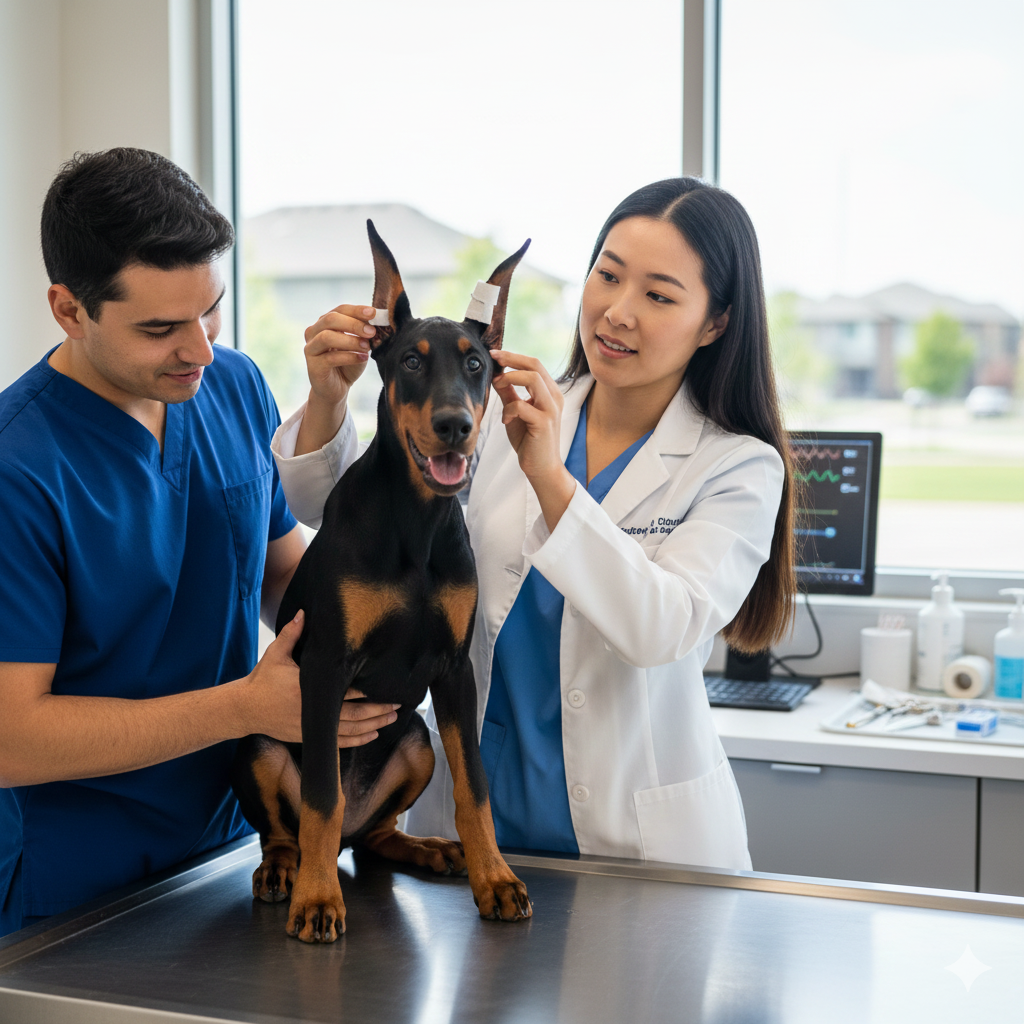
After reshaping, the ears are sutured and bandaged. The initial bandage helps protect the surgical site and supports early healing.
Post-Operative Care: A Critical Component
Post-operative care is often the most demanding part of the ear cropping process. Successful outcomes depend heavily on owner commitment.
Pain Management and Healing
Dogs are prescribed pain medication and sometimes antibiotics to manage discomfort and prevent infection. Swelling, mild discharge, and tenderness are expected during early healing.
Ear Posting
To help the ears stand upright, posting or taping is required for several weeks or even months. This involves:
- Regular cleaning
- Replacing supports as directed
- Monitoring for irritation or infection
Failure to follow posting instructions can result in ears that do not stand properly, even if the surgery itself was successful.
Risks and Potential Complications
As with any surgical procedure, ear cropping carries risks. These include:
- Infection
- Excessive bleeding
- Delayed healing
- Adverse reactions to anesthesia
- Scarring or asymmetry
Choosing an experienced veterinary team and following aftercare instructions significantly reduces these risks. The team at Normandy Boulevard Animal Hospital prioritizes patient safety, sterile surgical protocols, and thorough follow-up care.
Ethical Considerations and Veterinary Perspectives
Ear cropping remains a controversial topic within the veterinary community. Major veterinary organizations, including the American Veterinary Medical Association (AVMA), discourage cosmetic ear cropping when performed solely for appearance.
That said, veterinarians also recognize the importance of:
- Respecting client autonomy
- Providing accurate, unbiased information
- Ensuring animal welfare when procedures are legally requested
Our approach at Normandy Boulevard Animal Hospital is rooted in education first. We ensure owners understand the procedure, alternatives, risks, and long-term responsibilities before making a decision.
Alternatives to Ear Cropping
Many owners choose not to crop their dog’s ears—and that choice is fully supported. Natural ears do not negatively affect a dog’s health or quality of life.
If your concern involves chronic ear infections, your veterinarian may recommend:
- Routine ear cleaning
- Dietary adjustments
- Allergy testing
- Medical management
These options address health issues without cosmetic surgery.
Frequently Asked Question: What Is Ear Cropping and Why Is It Done for Dogs?
This article directly supports the FAQ featured on our website:
“Ear cropping is a surgical procedure where a portion of a dog’s ear is removed and reshaped. While aesthetic appearance is the most common motivation, some owners also choose it for traditional breed standards.”
As explained above, ear cropping is performed under anesthesia and can be safe when handled by experienced veterinarians with proper aftercare. The decision should always be made with a full understanding of both the benefits and responsibilities involved.
Choosing the Right Veterinary Team in Jacksonville
If you are considering ear cropping, selecting the right veterinary provider is essential. Look for:
- Licensed and experienced veterinarians
- Transparent consultation processes
- Clear aftercare instructions
- Ongoing post-operative support
The team at Normandy Boulevard Animal Hospital has extensive experience working with Jacksonville pet owners and provides comprehensive guidance before, during, and after any surgical procedure.
Learn more about our approach to ear cropping by visiting our dedicated service page:
👉
Ear Cropping in Jacksonville
Final Thoughts: Making an Informed Decision
Ear cropping is a personal decision that should never be taken lightly. While legal and commonly requested, it requires:
- Ethical veterinary oversight
- A clear understanding of risks
- Significant owner involvement during recovery
Our mission is not to persuade, but to educate and support. Whether you choose ear cropping or decide against it, the most important factor is your dog’s long-term health and comfort.
For additional resources, veterinary services, or to learn more about our hospital philosophy, visit:
👉
Normandy Boulevard Animal Hospital
If you have further questions, our veterinary team is always available to help guide you toward the best decision for your pet.